
Relational Ecology
Course & Practice Fellowship
A SIX-WEEK COURSE + ONE YEAR FELLOWSHIP – ONLINE
|
COURSE DATES |
LOCATION |
WITH |
INVESTMENT |
|
Sat, Oct 17 – Nov 21st, 2026 |
Live Online via Zoom |
Ethan Hsieh & Taylor Barratt |
$900 USD (includes practice fellowship) |
(Too) Familiar Experience?
You’ve probably done some of this before. Reading books, digesting long-form podcasts, a meditation app, perhaps therapy, and a retreat that opened something which quietly closed several weeks later.
And still, in the conversations that matter most, something familiar happens. You go quiet, or you go sharp, or you handle it beautifully and yet you strangely feel alone afterwards.
This shows up in how you meet the world too. Work that’s fine but no longer asks anything of you, or asks far too much. The strange flatness of an afternoon with nothing wrong in it, or a restlessness you can’t quite explain but nags at you. Perhaps you are aware this is all happening and can point to it, and yet that itself doesn’t seem to help.
We believe the Relational Ecology Program offers a way through.
The Relational Ecology Course
… is six live sessions for people who are looking for a shift in their lives. People who may have reached the law of diminishing returns on understanding and are ready to lay a foundation of a steady practice. It’s also for those whom have had that experience of returning from a retreat with some great experience or insight that has been lost to inactivity.
Any habit of practice that holds has to be a balanced and sustainable one. Train only your left arm and you get strong in one place and lopsided everywhere else. Study only the grammar and you can parse a language you still can’t speak. Sitting in silence builds one thing, talking honestly builds another, and neither covers for what the other leaves untouched. So these six weeks move across four kinds of practice: relational, playing with perspectives, meditative and movement. How they talk to and inform one another is what we’re pointing to with an ecology of practices.
Our EoP is a radically different approach from the one most of us were handed, and it does two things at once. It opens up more of your experience than thinking about yourself can reach. And it gives you experiences that make you want to keep practicing, which in the end is the only reason anyone ever does.
Six Saturdays, and then a year to keep going…
The course is six live sessions, three and a half hours each, on consecutive Saturday mornings starting on October 17th, 2026.
Throughout the course you will experience:
- Establishing a common relational foundation and learning to notice your experience more carefully.
- Developing steadiness in the body with an attention towards empathy.
- Exploring how context, desire and curiosity shape what happens between people and our thinking.
- Deepening perspective-taking and attunement, and the ability to enter another person’s experience.
- Widening your relational range and practicing responsiveness in more dynamic situations.
Between sessions there’s some homework to keep the thread through the week and keep the momentum going. Just enough to stay in it, keep it relevant and not enough to take over your week.
Six weeks is a real beginning, and not enough on its own. Therefore your registration also includes registration into a year of ongoing practice afterwards, no extra cost.
We like to use the gym analogy. Everyone knows a key part of longevity and wellbeing is tied to movement and exercise. We believe the same about an Ecology of Practices (EoP). But no one goes to the gym, for those moments in your life when you need to pull on a cable that has 50lbs attached to it. We go to the gym, so that when our strength is needed, we have it. We can carry the groceries without tearing a muscle. We can move a couch without throwing our back out. Same goes for the EoP, we practice not just to wait for that moment in our ‘real’ lives where the cashier asks if they can tell, and you accept, to hear their perception of you is. We do it so that when someone does (and they do and will), with or without your consent, you can notice what happens in your body, you can recall the familiarity, track it back to your patterns, notice the anger, and have choice in how you respond such that it’s appropriate for the situation and developing some capacity in how to care for yourself after.
And in that, the more people lift in the gym, the stronger they get. The more you practice, the stronger you get. It’s not something you just complete. And sometimes life limits how often we can go to the gym, and similarly how often you return to the practice fellowship, is yours to decide.
On Practice
Some practices are quiet and solitary. Some are done in pairs, face to face. Some happen in a group. What opens one person up could leave another cold. One key thing about our approach is we don’t so much see that as a problem to be solved as much as it’s information about what to do next.
Relational practice puts you in contact with someone else. Meditative practice steadies what you bring to that contact. Playing with perspectives lets you see from somewhere other than your own position. Movement includes the body, rather than isolating experience in the head. Over six weeks you’ll try enough practice to find out which ones meet you where you are. Some will feel awkward or challenging. One or two will probably feel like something you’ve been looking for.
No previous experience is needed, just a willingness to participate as fully as you can.
From people who’ve practiced with us…
The Practice FellowshipWhen the six weeks end, you keep access to the ATM Practice Fellowship (facilitated practice sessions for a full year), included in your registration, a US$500 value. This is what turns the Relational Ecology Course into the Relational Ecology Program (or REP). What changes a life isn’t the weekend that moved you. It’s integration. It’s the practice you keep coming back to long after the novelty has worn off (especially)in the weeks when you don’t especially feel like it. Capacities work the way strength does: built through repetition, lost through neglect, and impossible to cram. So you get your REPs in. One to two sessions a week, across the four kinds of practice (see the FAQ for DIME): Sessions such as Crossroads & Connections, meditation, relational attunement, dialectic-into-dialogos, Socratic search space, Socratic imaginal self-reflection, physical conditioning and more. Sessions are facilitated on rotation by ATM facilitators and TIAMAT SPIRE facilitators-in-training. You choose how to use it. Come weekly and build a rhythm. Come when a particular practice feels relevant. Stay with one thing long enough for it to deepen, or move around until something lands. There’s no curriculum to complete and no next level to reach. The dojo is simply open, and you come when you can. Your year begins when the course ends, and runs to 22 November 2027. For this first intake, at least one of the sessions will have start times scheduled between 10:00 and 12:00 Eastern on weekend days. The second, we’ll move around, sometimes on the other weekend day, sometimes for Eastern Timezone evenings, or European mornings. As the fellowship grows, we’ll continue to add sessions in other time slots and time zones. |
Fitment (is this for you, or not)
This might be for you if:
- You’re at a turning point: a relationship is ending or beginning, you’re in a job that no longer fits, a loss, a decision that won’t resolve.
- You’ve done the reading, the retreats and the workshops, and are still waiting for the results to show up in your life.
- You’ve done a great deal of thinking about yourself or the world and would now like to act.
- You’re looking for another way of relating: to others, to themselves, and to the world you’re part of.
Note: If you’re currently seeing a mental health professional, we strongly recommend you share this page with them for their advice on fitment at this time.
This might NOT be for you if:
You’re looking for a quick fix, a networking room, or another set of ideas for the collection. Anyone who wants to learn about this rather than do it is probably not a great fit. Also, if you’re currently in acute distress, this likely isn’t the right container. Please get support first, and come when you’re steadier.
This is an educational and experiential program. It is not psychotherapy, mental-health treatment, or a substitute for professional care.
About your Facilitators
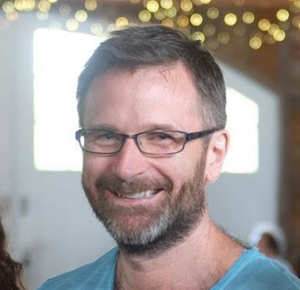
Taylor Barratt
As Director of Practice and Education with Awaken to Meaning, Taylor brings over 13 years of experience in facilitation, design, and training. Along with John, he has been a robust voice of guidance in the design and pedagogical execution of TIAMAT. He’s a certified Integral Facilitator and has co-designed the Socratic Search Space, Socratic Imaginal Self-Reflection as well as the pedagogical structures for Dialectic-into Dialogos
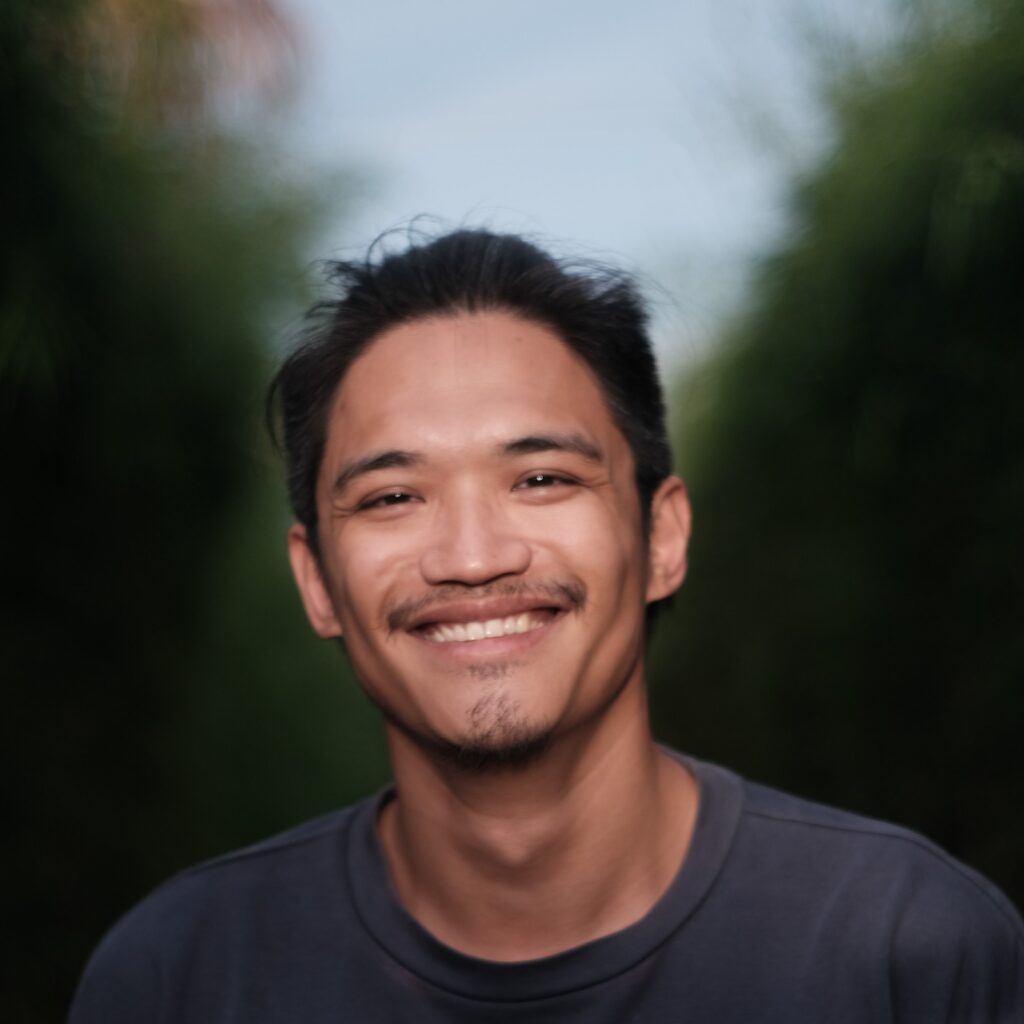
Ethan Hsieh
Ethan Hsieh is working in the intersection between actor-training and 4E cognitive science. With an MA in Professional Practice: Theatre and Drama Facilitation from Liverpool Institute for Performing Arts, Ethan has designed and delivered transformational community-building programs, retreats and workshops in Taiwan, Japan, Indonesia, France, Czechia and Singapore.
Where this comes from…
These practices draw on a long history of contemplative and dialogical traditions (see our influences under ‘Our Practices’), further positioned by psychology and cognitive science, especially the work on the cognitive science of wisdom and meaning developed by Dr. John Vervaeke and his colleagues.
You don’t need to know any of that to take part. The ideas are there to orient the practice, not the other way round. What matters is what happens in the sessions..
Register
Six Sessions from Sunday, January 17th, 2027, including a year of on-going practice starting February 22nd, 2027 through to February 22nd, 2028.
- Basic Fee — $900 USD
- Registration with someone you are in relationship with — 20% off with coupon REPCOUPLE26 (be sure to specify who your relationships are when registering)
- Note: If you completed ATM Program Level 1 or Level 2, 3-or-more months of the VF EoP Program, or the 2026 Toronto TIAMAT Tier 2, or 2026 TIAMAT-X Europe Tier 2, please contact us for your discount coupon code.
- All Sessions – 10:00–13:30 Eastern Time – All are Sundays with the exception of Saturday, February 13th, 2027
Frequently Asked Questions
No. The six weeks exist to give everyone a shared starting point, whether you’re new to this work or have been with us for years.
Let us know in advance. Being present for all six matters, because the practices build on each other and so does the group. But in case you do have to miss one, we can usually find a way around it, including making up the session. Get in touch rather than dropping out.
No. It’s an educational and experiential course, not psychotherapy, mental-health treatment, or a substitute for professional care.
No. The course is designed to be worth doing on its own, to show you the potential of engaging in an Ecology of Practices, and the year of practice is there if you want to continue, and we do highly recommend continuing. We believe the more time you put into practice, the more the results of that start to show up in your life.
Yes. We strongly believe in the benefits of doing this kind of work and practice with people you are in a committed relationship with (romantic partner, business partner, friend, family member, even some colleagues) and if you do register together with such a person you can each receive 20% off. You don’t need to practice together during the course; you just need to register around the same time for the same dates. Contact us if you have additional questions.
Not all the time. Pairs and small groups rotate across the six weeks, so you’ll mostly practice with people you’ve never met. Doing both is often beneficial and in some cases part of how the practices work. But going through it alongside someone from your own life can be incredibly valuable: you share the experience, you come away with a common language for what happens between you, and the practice doesn’t stay in the room on Saturday. It stays with both of you.
One to two facilitated sessions a week across a range of practices. You choose what to attend and how often.
Please tell us anyway and contact us and let us know your interest. As you can imagine with a worldwide audience and an expanding facilitator base, we’re always considering and planning sessions that are more compatible for other time zones and it helps to know where people are and where their needs are.
There’s the 3.5 hour sessions on Saturdays, and then there’s around another hour of additional practice (most of the time this practice can be completed alone, referencing instructions via an email using video or audio guidance. There’s also a couple instances where you will schedule a convenient time for you and a partner to practice, still within the additional hour per week). So 3.5 + 1 hour = 4.5 hours/wk. This is an amount that is enough to keep the thread, but not enough to take over your week.
No. However, for those interested in training or certification, it does form part of the prerequisite pathway for our more intensive training programs, including TIAMAT.
Completing the course doesn’t guarantee admission, and you don’t need to pursue further training for the course to be worthwhile.
Your access to on-going practice with the fellowship ends after a year from completing the 6-week course. You can then renew for another twelve months of ongoing practice for the practice fellowship renewal rate (which at the time of writing is $500 USD).